
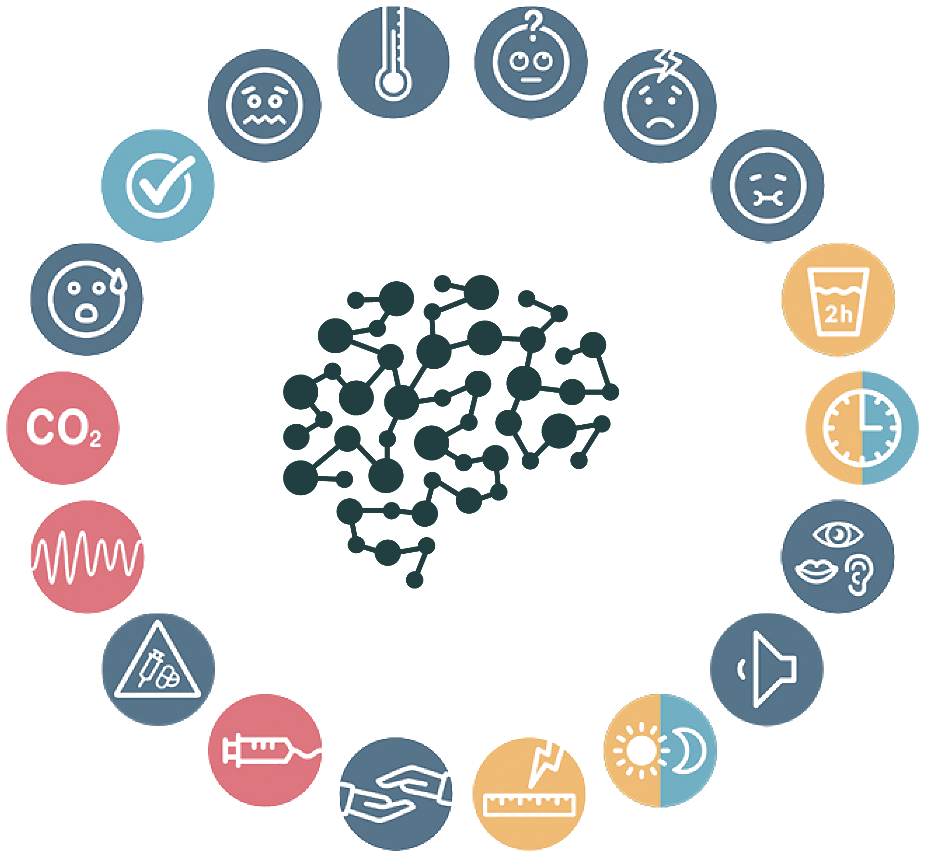
Why Safe Brain?
Brain health begins before surgery – and does not end in the recovery room.
Patients already differ before surgery in age, comorbidities, baseline cognition, and individual vulnerability. During anesthesia and surgery, additional physiological stressors, medications, and therapeutic decisions may affect brain function.
Despite advances in surgery and anesthesia, neurological complications after surgery often remain unrecognised. Postoperatively, these influences may be reflected in delirium, delayed neurocognitive recovery, perioperative neurocognitive disorders (PND) or functional decline — with impact on independence and quality of life.
The Safe Brain Initiative (SBI) is an international quality and research initiative that considers these phases together and integrates evidence-based protection strategies into clinical routine. AI²POC contributes to implementation, digital solutions and accompanying research.
The key is not a single measurement, but the patient's entire perioperative trajectory — and the measurability of brain health as a quality goal.
What influences perioperative brain health?
Awareness & Assessment
How can clinicians be sensitised and vulnerable patients identified early through cognitive screening, frailty assessments and delirium risk stratification?
EEG & Anesthesia
Which patterns of intraoperative brain activity can be identified — and how are EEG-guided anesthesia, avoidance of unnecessarily deep anesthesia and individual patient characteristics related?
Protection & Delirium
Which evidence-based protective measures — from haemodynamics and analgesia to sleep, mobilisation and delirium-prevention concepts — are associated with postoperative delirium and neurocognitive changes?
Measurement & Outcomes
How can delirium incidence, neurocognitive outcomes, PROMs/PREMs, length of stay and functional recovery be captured so that benchmarking and continuous quality improvement become possible?