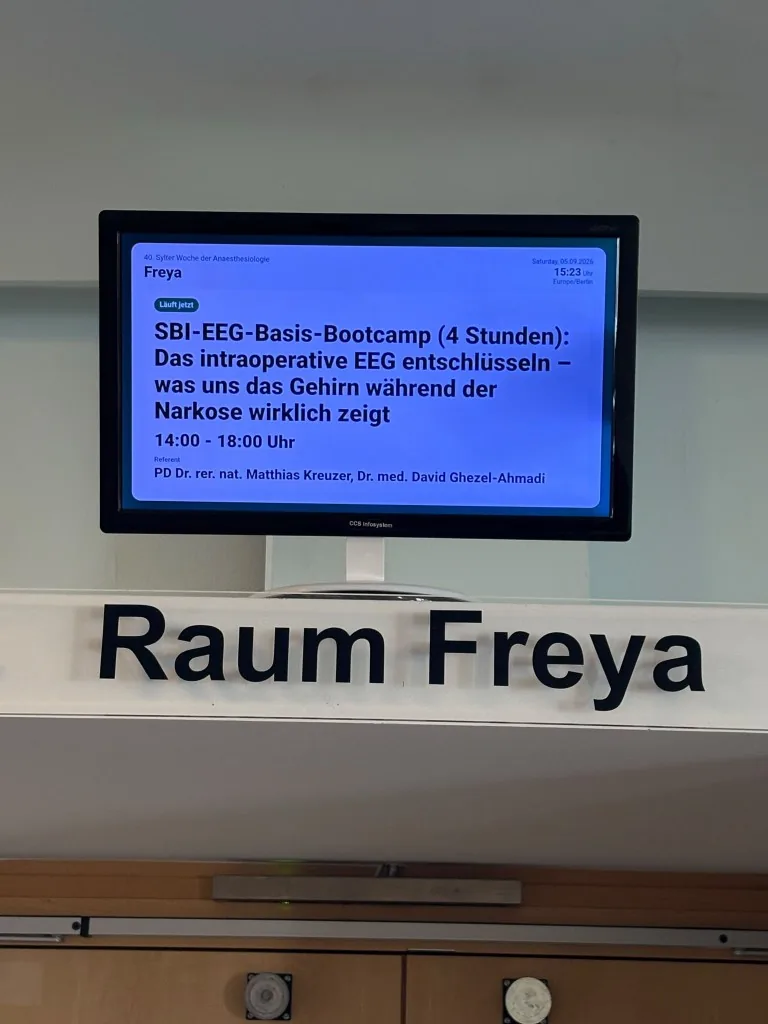
As part of the 40th Sylt Week of Anesthesiology, a practice-oriented EEG bootcamp of the Safe Brain Initiative (SBI) took place on Sylt on 5 September 2026. The central question was how modern EEG-based neuromonitoring methods can be used specifically for individualized anesthesia management and for perioperative protection of the brain.
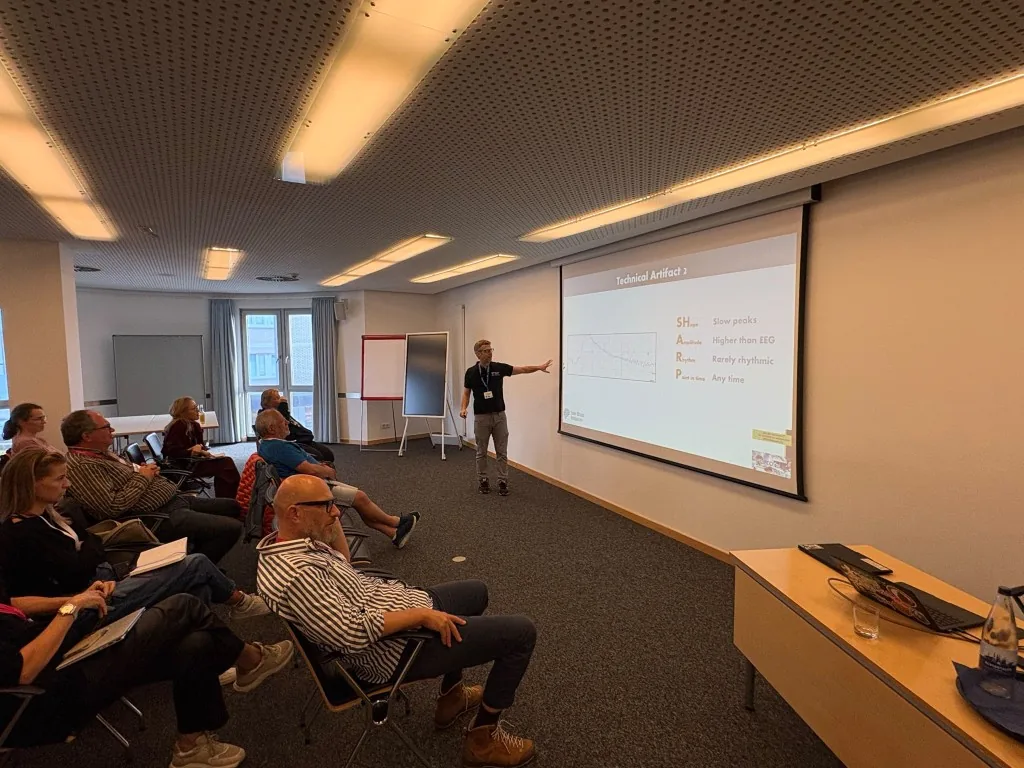
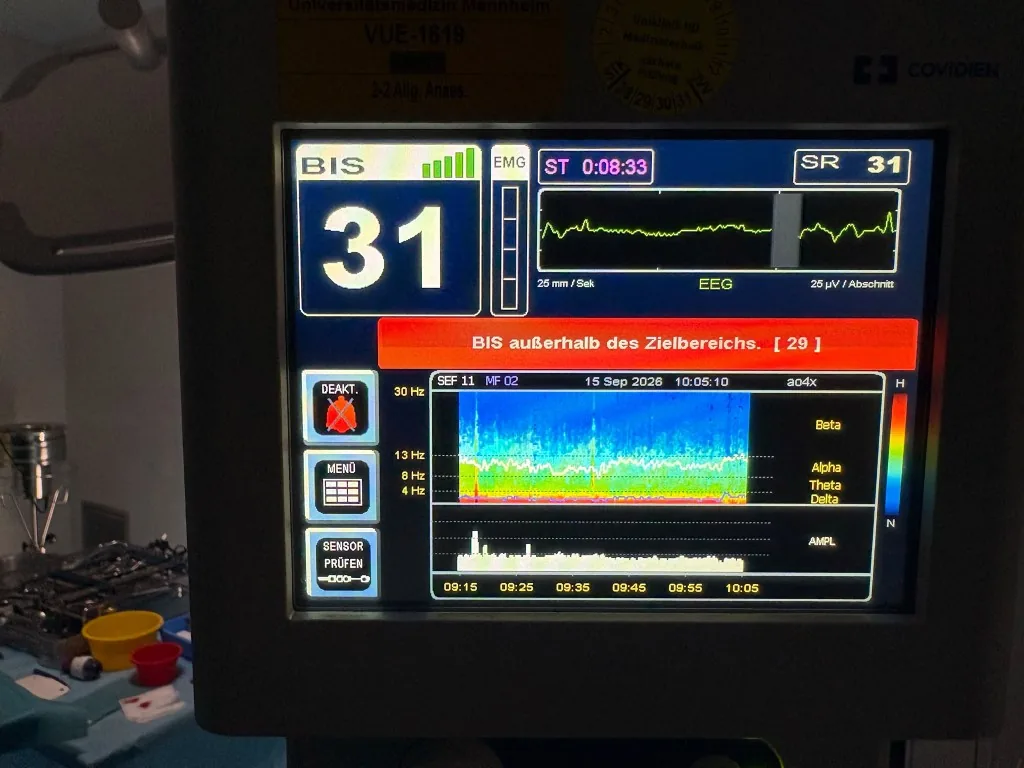
A particular focus was the practical interpretation of intraoperative EEG signals. Using typical patterns during general anesthesia, physiological foundations, changes under different anesthetics, and the opportunities and limits of numerical monitoring indices were discussed.
Together with PD Dr. Martin Kreuzer, current concepts for EEG-based control of anesthetic depth were explored in greater depth. It became clear that modern neuromonitoring goes far beyond looking at individual numerical values. What matters is understanding the underlying raw signals and how they change individually over the course of anesthesia.
This approach is becoming increasingly important especially for older, multimorbid, or cognitively vulnerable patients. The aim of personalized anesthesia management is to avoid unnecessarily deep phases of anesthesia, recognize physiological changes early, and tailor therapy more closely to each patient’s individual condition.
For our working group at University Medicine Mannheim, perioperative brain health monitoring is a central part of clinical and scientific development. Within the Safe Brain Initiative, clinical quality parameters, postoperative outcomes, and neuromonitoring data are systematically brought together.
In addition, within AI²POC – Artificial Intelligence for Interdisciplinary Perioperative Care, we are investigating how high-resolution biosignals such as EEG, vital signs, and other neuromonitoring data can in future be analyzed together with clinical information. Looking ahead, data-driven and AI-based methods should help detect complex perioperative patterns earlier and make clinically relevant information from large data volumes usable.
The EEG bootcamp on Sylt therefore offered not only intensive practical training, but also an opportunity for interdisciplinary exchange on current developments in brain health, neuromonitoring, digital data use, and artificial intelligence.
The approaches discussed there feed directly into our current research and development projects in Mannheim.
Our shared goal is increasingly personalized, safe, and data-driven perioperative medicine — with a particular focus on protecting the brain.